
Check Glynn County's Current Owner
The Glynn County QPublic card lists the current owner for assessment purposes. Read that name beside the parcel identifiers and year. The populated sample also carries mailing and situs addresses. It includes the legal description, subdivision, map and block-lot, deed reference, last sale information, a homestead flag, and annual values. Those extra fields matter. They show that the owner belongs to the right parcel rather than a lookalike address.
| Owner | Name shown on the assessment roll |
|---|---|
| Mailing Address | Destination used for owner and tax correspondence |
| Location/Situs | Physical address of the taxable parcel |
| Last Sale Date | Date displayed for the latest sale entry |
| Deed Reference | Book/page or recorded-document link used to confirm the transfer |
An owner is not always an occupant. The mailing address may be a post office box. It may be a business office or an entirely different property. Treat it as a contact point, never as proof that someone lives at the situs.
A street can hold several near-identical results. Weigh the alias field. Weigh the property class, subdivision, zoning, acreage, and district fields too. None of these proves title. They do help reject a parcel sitting in the wrong block or tax district. Save a dated copy of the card. Later changes can then be measured against the exact display you relied on.
Date the Glynn Owner Record
Glynn County tax billing follows the January 1 owner of record. Sell after that date. The assessment card may still show the prior owner until the next digest refresh. The Tax Commissioner sends bills to the January 1 owner. A separate bill goes to a new owner after a change. That convention explains why two official systems can disagree about a name.
The QPublic card displays no refresh timestamp. Cite the assessment year. Note the date you viewed the record. After a recent sale, go straight to the Clerk's recorded index. Do not wait for the roll to update.
January 1 billing also means the tax statement and the deed describe different moments. A separate bill to a new owner is just a mailing step. It does not amend the recorded conveyance. Rely on dates and on each record's role, not on one system over the other.
Recent-sale check. The assessment roll can lag a transfer; the newest recorded deed may identify the more current owner.
Separate Situs from Owner Mail
Glynn's assessor search separates the location address from the mailing address. The situs identifies the taxable land. The mailing field shows where notices go. That split matters for owners with a post office box, for businesses, for estates, and for anyone whose correspondence travels elsewhere.
A Brunswick postal label does not create Brunswick jurisdiction. County records span the city, the islands, and unincorporated areas alike. Check the tax district, the GIS position, and the legal description before assuming the postal city governs the parcel.
The same distinction guards against a common mistake. A mailing address on St. Simons Island, in Brunswick, or outside Georgia tells you where a notice lands, not where the land lies. Situs and legal description remain the true location keys.
Confirm Glynn County Ownership Now
The Clerk of Superior Court keeps Glynn deeds and points researchers to the GSCCCA Real Estate Index. Confirm the present owner by following the parcel card's recorded reference, or search the displayed owner as a grantee. Match the legal description and instrument date, not just the name.
- Record the Owner field, parcel ID, situs, legal description, deed reference, and assessment year.
- Open the GSCCCA index and locate the newest relevant conveyance.
- Read the deed image for the grantee and land description. Check for a later corrective or transfer instrument.
- If an entity appears, verify its exact name and control number in Georgia's business search.
- Owner of record
- The owner named in the official record for its stated date or year.
- Assessment roll
- The annual property list used for valuation and tax administration.
- Situs
- The physical location of the taxable parcel.
- Recording lag
- The period between a transfer and its appearance in another public system.
The GSCCCA index overview documents the statewide real-estate search path.
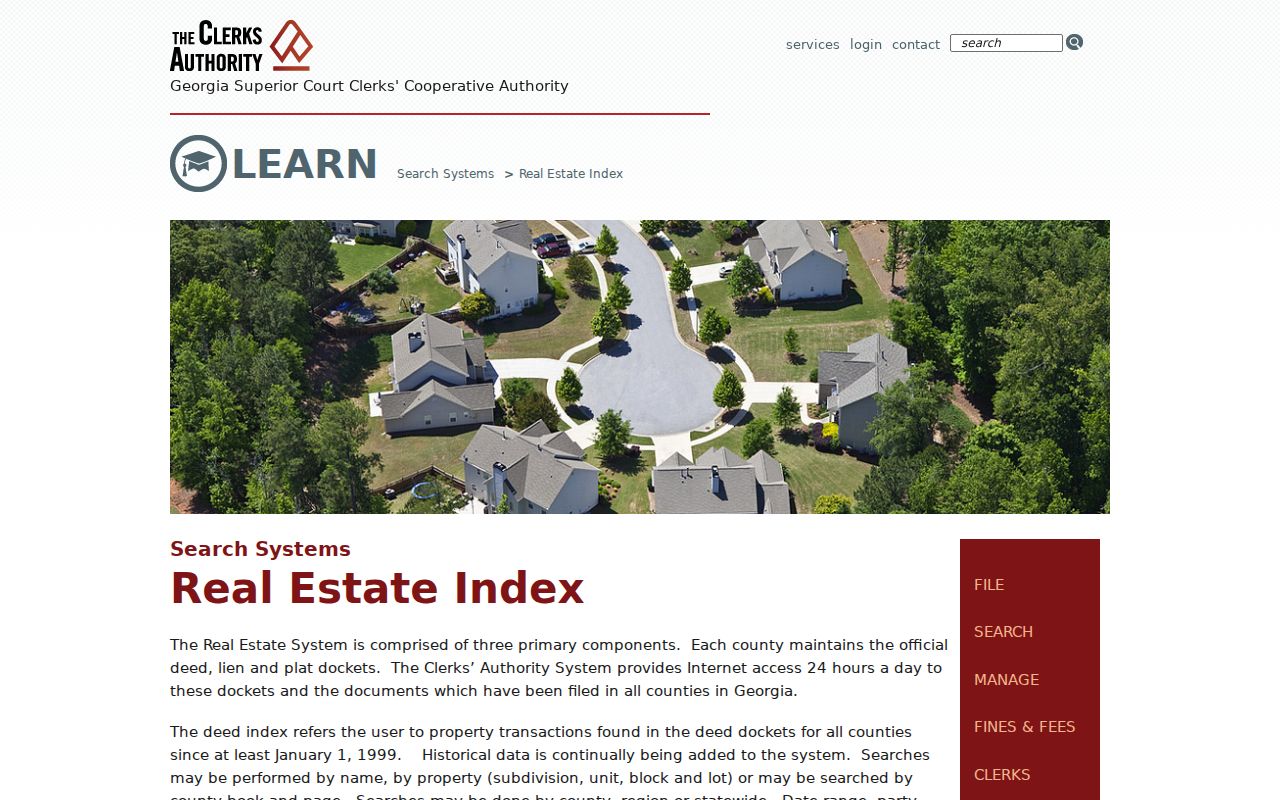
The official property records overview page lists the deed indexes and recorded instruments the Clerk makes public. Compare the newest grantee, the recording date, and the book and page against the dated assessment card.
Read Glynn Entity Owners
An LLC can show up as the current owner of record. So can a corporation or a trustee. When that happens, run the entity name exactly as recorded, suffix and all. The Georgia Business Search lets you query by name, control number, registered agent, officer, or designated agent. That helps separate look-alike entities. It also pulls up public filing details.
Remember that a business filing never transfers title. The recorded deed does that work. A trust label works the same way. It will not list every beneficiary or prove how much power a trustee holds. Probate Court filings can explain who had authority over an estate. But the transfer itself belongs in a later executor or administrator deed placed in the deed records.
Probate Court sits at 701 G Street. It handles wills, administration, and petitions to sell or convey estate property. Match any order or petition with the instrument recorded afterward. A probate authorization tells you why a signature was valid. Yet only the land record tells you what actually entered the deed index.
Note: Keep entity names verbatim. Punctuation, initials, and legal suffixes can separate one owner from another.
Test Glynn Homestead Clues
The assessor card sometimes carries a homestead flag or an exemption code. Glynn County's published rule ties homestead to ownership and occupancy on January 1. April 1 is the general application deadline. A flag helps a current-owner review. Still, it proves neither title nor who lives at the address today.
Treat the flag as one clue among several. Compare the Owner field against several documents. These include the current assessment year, the latest deed, and any exemption correspondence. See a wrong field? Contact the Property Appraisal Office at 1725 Reynolds Street, Suite 101. The recorder will not change a tax card.
The published calendar assigns January 1 to use, condition, and value. April 1 closes the general exemption and return window. Notices, digest work, and bills follow in later months. A live notice can shift a date. So cite the current year whenever the property records are used.
Watch Glynn Filing Activity
The GSCCCA FANS service watches transmitted index data. It sends a notice when a registered name or address matches a new filing. That gives a current owner an early heads-up. The alert covers activity after the baseline ownership check is done.
Alerts have limits. FANS promises neither complete nor instant notice, and an alert never rules on fraud. Pull the underlying index entry and image. Keep the alert itself. Call the Clerk if a filing is unfamiliar. In short, it is monitoring rather than title insurance or a backward deed-records search.
Respect Glynn Owner Boundaries
The tax roll lists a mailing address. It serves as the public correspondence clue for a property matter. Georgia's Safe at Home program shields qualifying survivors behind a designated address. Redactions do appear in public records. Never try to reconstruct concealed residence information.
A current-owner result aids purchase diligence, deed-fraud review, estate work, and boundary communication. Yet it cannot name every occupant or settle legal title. For the fuller picture, the Glynn County owner-finding method shows how assessor and deed records fit together.
Lawful use. Use owner data only for legitimate property research. Never use it to stalk, harass, intimidate, or harm anyone.